2025 Ford Mustang GTD Review: Unleashing Supercar Performance
The 2025 Ford Mustang GTD isn’t just another Mustang. It’s a statement. It’s Ford taking the gloves off and directly challenging the established supercar elite. With a price tag starting from £315,000, it’s a serious investment, but does the GTD deliver on its promise of track-honed performance and supercar-level engineering? Our first drive sought to answer that very question. This Ford Mustang GTD review delves into the heart of this beast, exploring its unique features and assessing its real-world capabilities.

A Mustang Reimagined: Supercar DNA
The GTD isn’t merely a tweaked Mustang; it’s a comprehensive re-engineering project. Ford has applied supercar logic, focusing on aerodynamics, weight reduction, and advanced suspension technology. This isn’t just about straight-line speed; it’s about cornering prowess and overall track dominance. The heart of the GTD is rumored to be a potent variant of the 850bhp engine found in other high-performance Ford models, ensuring blistering acceleration and relentless power delivery. To truly understand this transformation, a deep dive into its key features is essential.
Aerodynamic Mastery
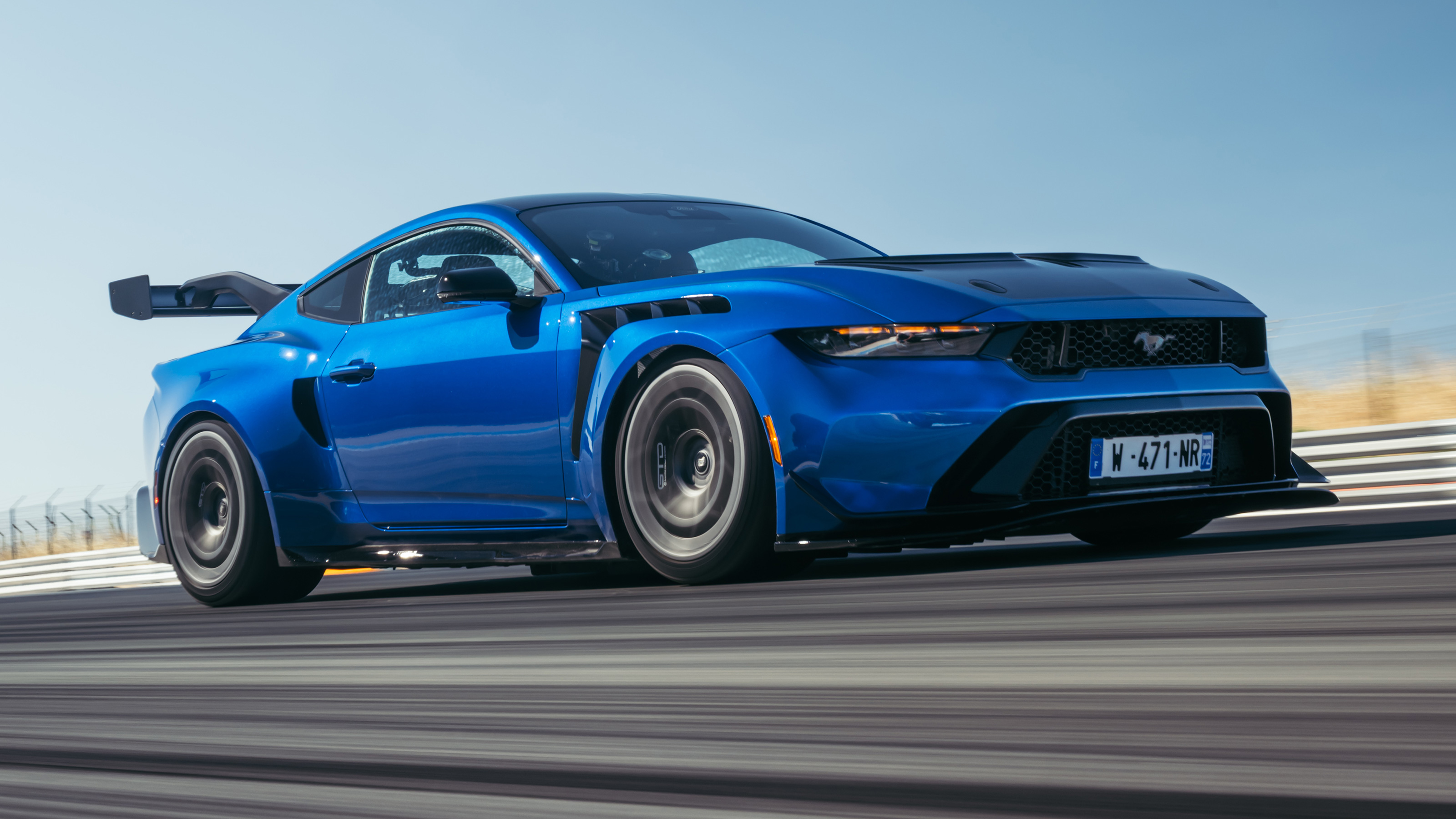
The most striking visual element of the GTD is its aggressive aerodynamic package. The massive rear wing, the sculpted front splitter, and the carefully crafted vents all work in harmony to generate significant downforce. This downforce plants the car firmly on the track, allowing for higher cornering speeds and improved stability. Even the underbody has been meticulously designed to optimize airflow, minimizing drag and maximizing aerodynamic efficiency. This level of attention to detail is what separates the GTD from other performance Mustangs.
Advanced Suspension Technology
Beyond aerodynamics, the GTD boasts a state-of-the-art suspension system. Adaptive dampers, adjustable ride height, and advanced electronic controls work together to optimize handling in all conditions. The suspension is designed to keep the tires in contact with the road surface, maximizing grip and providing the driver with exceptional feedback. This sophisticated system allows the GTD to adapt to different track conditions and driving styles, ensuring optimal performance whether you’re a seasoned racer or a weekend enthusiast.
Weight Reduction Strategies
To further enhance performance, Ford has implemented various weight reduction strategies in the GTD. Lightweight materials, such as carbon fiber, have been used extensively throughout the car’s construction. This reduces the overall weight of the vehicle, improving acceleration, braking, and handling. The GTD’s commitment to weight reduction underscores its dedication to achieving supercar-level performance.
First Drive Impressions: Taming the Beast
Our first drive of the Ford Mustang GTD took place on a challenging circuit, providing the perfect opportunity to assess its capabilities. From the moment we hit the track, it was clear that this was no ordinary Mustang. The GTD felt planted and responsive, inspiring confidence in every corner. The steering was precise and communicative, allowing us to place the car exactly where we wanted it. The brakes were incredibly powerful, providing consistent stopping power even after repeated hard use.

Power and Performance
The GTD’s engine delivered relentless power throughout the rev range. Acceleration was brutal, pinning us back in our seats as we rocketed down the straights. The engine note was intoxicating, a symphony of mechanical fury that added to the overall driving experience. The GTD’s performance is a testament to Ford’s engineering prowess, showcasing what can be achieved when a dedicated team sets out to build a true supercar slayer.
Handling and Agility
What truly impressed us was the GTD’s handling. The car felt incredibly balanced and agile, responding instantly to our inputs. The advanced suspension system kept the car composed even over bumps and imperfections in the track surface. We were able to push the GTD harder and harder, exploring its limits with confidence. This level of handling prowess is what sets the GTD apart from other muscle cars, placing it firmly in supercar territory.
A Refined Driving Experience
Despite its track-focused nature, the GTD also offered a surprisingly refined driving experience. The interior was well-appointed, with comfortable seats and intuitive controls. The noise levels were reasonable, even at high speeds. The GTD is not just a track weapon; it’s also a car that can be enjoyed on the road. This versatility makes it a truly special machine.
The Competition: American Muscle Redefined
The GTD enters a competitive market, challenging established players like the Porsche 911 GT3 RS and the Lamborghini Huracan. However, the GTD offers a unique proposition: American muscle redefining the supercar. It combines the raw power and aggressive styling of a traditional muscle car with the advanced technology and sophisticated engineering of a modern supercar. This blend of attributes makes the GTD a compelling alternative for those seeking something different.

Challenging the Status Quo
The GTD’s arrival signals a shift in the high-performance car market. It demonstrates that American manufacturers can compete with the best in the world, offering a compelling blend of performance, technology, and value. The GTD is not just a car; it’s a symbol of American ingenuity and engineering prowess. It proves that American muscle can evolve and adapt to meet the demands of the modern era.
A Unique Value Proposition
While the GTD’s price tag is significant, it still represents a compelling value proposition compared to some of its rivals. It offers comparable performance to cars costing significantly more, making it an attractive option for those seeking supercar performance without breaking the bank. The GTD’s combination of performance, technology, and value makes it a truly unique offering in the high-performance car market.
The Future of Performance: What’s Next for Ford?
The GTD is not just a one-off project; it’s a glimpse into the future of performance at Ford. It demonstrates the company’s commitment to pushing the boundaries of engineering and technology. The GTD’s success could pave the way for future high-performance models, further solidifying Ford’s position as a leader in the automotive industry. Perhaps we’ll see similar technology trickle down to more affordable models in the future, enhancing the performance of the entire Mustang lineup.

Innovation and Technology
The GTD showcases Ford’s commitment to innovation and technology. The advanced aerodynamic package, the sophisticated suspension system, and the lightweight construction all represent significant advancements in automotive engineering. These technologies could potentially be adapted and implemented in other Ford models, improving their performance and efficiency. The GTD serves as a testbed for future innovations, pushing the boundaries of what’s possible.
A Legacy of Performance
The GTD builds upon Ford’s rich legacy of performance. From the iconic Mustang to the legendary GT40, Ford has a long history of producing high-performance vehicles. The GTD continues this tradition, offering a modern interpretation of American muscle. It’s a car that honors the past while embracing the future.
Conclusion: The Ford Mustang GTD – A Supercar Contender?
The 2025 Ford Mustang GTD review proves this is more than just a muscle car; it’s a legitimate supercar contender. It combines raw power, advanced technology, and sophisticated engineering to deliver a driving experience that is both exhilarating and refined. While its price tag may be prohibitive for some, the GTD offers a unique blend of performance, technology, and value that makes it a compelling alternative to established supercar brands. The GTD is a testament to Ford’s engineering prowess and a glimpse into the future of performance. It’s a car that will undoubtedly leave its mark on the automotive landscape.