Cupra Delays US Entry: Market Dynamics Halt 2030 Launch
The automotive world has been buzzing with anticipation for the arrival of new players in the US market. Among the most eagerly awaited was Cupra, the Spanish performance brand under the Volkswagen Group umbrella. However, recent news has dampened the enthusiasm: Cupra has announced a postponement of its planned US launch, originally slated for 2030. This decision, attributed to “ongoing challenges within the automotive industry and in light of evolving market dynamics,” raises questions about the factors influencing the brand’s strategy and the future of its presence in North America.

This article delves into the reasons behind Cupra’s decision to postpone its US launch, examining the challenges facing the automotive industry, the evolving market dynamics, and the potential implications for consumers and the broader automotive landscape. We will also explore the possibility of a future US entry for Cupra and the strategies the brand might employ to overcome the current obstacles.
The Road to America: Cupra’s Initial Plans
Cupra’s intention to enter the US market was initially met with excitement. The brand, known for its sporty designs and performance-oriented vehicles, was seen as a potential disruptor in a market dominated by established players. The original plan involved a launch around 2030, giving Cupra ample time to prepare its product lineup and establish a strong brand presence. Discussions with Penske Automotive Group further fueled speculation about a strategic partnership to facilitate the US market entry.
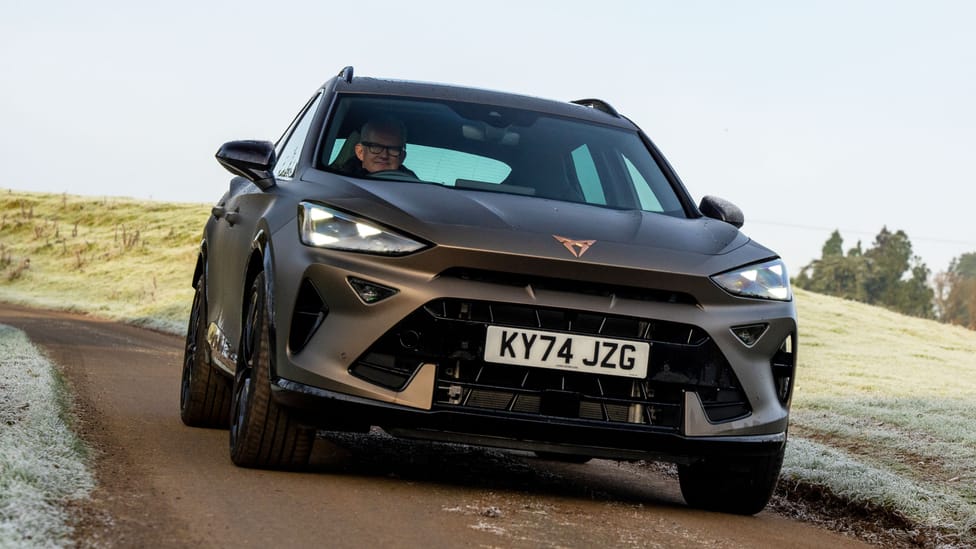
A key component of Cupra’s strategy was the potential production of a larger SUV in one of Volkswagen’s North American factories. This move would have mitigated the impact of tariffs on imported vehicles, making Cupra’s offerings more competitive in the US market. Even with the recent US-EU trade deal reducing tariffs on EU-built cars, Cupra’s decision to postpone its launch suggests that other factors played a more significant role.
Challenges in the Automotive Industry
The automotive industry is currently facing a confluence of challenges that are impacting manufacturers worldwide. These challenges include:
- **Supply Chain Disruptions:** The global chip shortage, coupled with disruptions caused by geopolitical events, has severely impacted production capacity.
- **Inflation and Rising Costs:** The increasing cost of raw materials, labor, and transportation is putting pressure on manufacturers’ profit margins.
- **Technological Transformation:** The shift towards electric vehicles (EVs) and autonomous driving requires significant investments in research and development.
- **Regulatory Uncertainty:** Evolving emissions standards and safety regulations create uncertainty and require manufacturers to adapt their product strategies.
- **Changing Consumer Preferences:** Consumer preferences are shifting towards SUVs, crossovers, and electric vehicles, requiring manufacturers to adjust their product offerings accordingly.
These challenges are particularly acute for new entrants like Cupra, which lack the established infrastructure and economies of scale of larger, more established automakers. Entering a new market requires substantial investment in marketing, distribution, and service infrastructure, which can be difficult to justify in the face of these industry-wide challenges. The evolving market dynamics surrounding electric vehicles also present a unique set of considerations; brands must carefully assess consumer demand and infrastructure readiness before committing to a large-scale EV launch. For example, understanding the charging infrastructure availability is crucial when considering markets for electric vehicles, much like the Asus Chromebook CX15, a budget-friendly powerhouse, needs to be accessible to a wide range of users to be successful.
Evolving Market Dynamics: The US Automotive Landscape
The US automotive market is one of the most competitive in the world, with a diverse range of domestic and international brands vying for market share. In recent years, the market has been characterized by several key trends:
- **Dominance of SUVs and Trucks:** SUVs and trucks account for a significant portion of new vehicle sales in the US.
- **Growing Popularity of Electric Vehicles:** Electric vehicle sales are on the rise, driven by government incentives and increasing consumer awareness.
- **Increased Competition from Asian Brands:** Asian automakers, particularly Korean brands like Hyundai and Kia, have gained significant market share in recent years.
- **Focus on Technology and Connectivity:** Consumers are increasingly demanding advanced technology features, such as infotainment systems, driver-assistance systems, and connectivity features.

For Cupra to succeed in the US market, it would need to develop a product lineup that caters to these trends. This would likely involve offering a range of SUVs and electric vehicles with advanced technology features. However, competing with established players in these segments would be a significant challenge. The company’s planned larger SUV, possibly built in North America, would have been a crucial part of addressing the market’s preference for larger vehicles. It’s worth noting that while some consumers are drawn to high-performance vehicles like the Corvette ZR1X, which conquers the Nürburgring, the broader US market demands practicality and versatility, especially in the SUV segment.
Strategic Considerations for Cupra
Given the challenges and evolving market dynamics, Cupra’s decision to postpone its US launch appears to be a prudent one. The brand needs to carefully assess its product strategy, pricing strategy, and marketing strategy to ensure a successful entry into the US market. Key considerations for Cupra include:
- **Product Lineup:** Developing a product lineup that caters to US consumer preferences, with a focus on SUVs, electric vehicles, and advanced technology features.
- **Pricing Strategy:** Determining a competitive pricing strategy that reflects the value proposition of Cupra’s vehicles.
- **Marketing Strategy:** Building brand awareness and creating a strong brand image in the US market.
- **Distribution Network:** Establishing a robust distribution network to ensure adequate vehicle availability and service support.
- **Partnerships:** Exploring potential partnerships with established automotive groups or technology companies to leverage their expertise and resources.
A phased approach to market entry may be a more viable option for Cupra. This could involve initially launching a limited number of models in select regions, followed by a gradual expansion across the country. This approach would allow Cupra to test the market, gather feedback, and refine its strategy before making a full-scale commitment. The decision to postpone the launch gives Cupra the opportunity to re-evaluate its plans and develop a more comprehensive strategy for entering the US market. It’s also a chance to observe how market trends evolve and adjust its product offerings accordingly, ensuring they align with future consumer demands. Considering the complexities of entering a new market, similar to how the Dell Chromebook 3120 requires a strategic approach to target the study-ready budget segment, Cupra needs a well-defined plan to succeed.

Potential Scenarios for the Future
While the postponement of Cupra’s US launch is disappointing news for some, it does not necessarily signal a complete abandonment of the brand’s American ambitions. Several scenarios could unfold in the coming years:
- **Delayed Launch:** Cupra could eventually enter the US market at a later date, once the automotive industry stabilizes and market conditions improve.
- **Strategic Partnership:** Cupra could partner with an established automotive group or technology company to facilitate its US market entry.
- **Limited Presence:** Cupra could choose to focus on select regions or niche markets within the US.
- **Re-evaluation of Product Strategy:** Cupra could re-evaluate its product strategy and develop a lineup that is better suited to the US market.
Regardless of the path Cupra chooses, a successful US entry will require careful planning, strategic execution, and a willingness to adapt to the evolving market dynamics. The brand must demonstrate a clear understanding of US consumer preferences and develop a product lineup that offers a compelling value proposition. The automotive landscape is ever-changing, and Cupra’s ability to navigate these changes will determine its success in the US market. The challenges faced by Cupra are not unique, and other brands have had to adapt their strategies to succeed in the competitive US market. For instance, just as the Apple iPhone 14 Pro Max (2022) needed to offer compelling features to stand out, Cupra will need to differentiate itself to attract US consumers. In the meantime, enthusiasts will have to wait and see if Cupra can overcome the obstacles and eventually bring its sporty and stylish vehicles to American roads.

The Impact of Trade Agreements
The recent US-EU trade deal, which reduces tariffs on EU-built cars entering the US from 27.5% to 15%, is a positive development for European automakers. However, Cupra’s decision to postpone its US launch suggests that tariffs were not the primary obstacle. Other factors, such as supply chain disruptions, rising costs, and the need to invest in electric vehicle technology, likely played a more significant role. While lower tariffs make it more attractive for European brands to export vehicles to the US, they do not address the underlying challenges facing the automotive industry. The deal could, however, influence Cupra’s future strategy, potentially making it more feasible to import vehicles from Europe rather than establishing a manufacturing presence in North America. This would reduce the upfront investment required for market entry and allow Cupra to focus on building brand awareness and establishing a distribution network. However, the brand would still need to address the challenges of competing with established players and adapting to US consumer preferences. The reduction in tariffs could also make it easier for Cupra to offer a wider range of models in the US, including those that are not currently manufactured in North America. This would give the brand more flexibility in tailoring its product lineup to meet the specific needs of the US market. The reduction of tariffs is similar to the Dell Latitude 3420’s focus on power and portability, where both attempt to find a strategic advantage in the market.
Consumer Expectations and Brand Positioning
For Cupra to resonate with US consumers, it needs to clearly define its brand identity and value proposition. The brand is known for its sporty designs and performance-oriented vehicles, which could appeal to a segment of US consumers. However, Cupra also needs to differentiate itself from other performance brands in the market, such as BMW, Audi, and Mercedes-Benz. One way to do this is to focus on offering a more accessible and attainable performance experience. Cupra could position itself as a brand that offers sporty and stylish vehicles at a more competitive price point than its German rivals. This would make Cupra more appealing to a wider range of consumers, including younger buyers who are looking for a performance vehicle that is both fun to drive and affordable. Cupra could also emphasize its Spanish heritage and design flair. This would help the brand to stand out from its competitors and create a unique brand identity. Cupra’s vehicles could be marketed as being stylish, sophisticated, and expressive, reflecting the passion and creativity of Spanish culture. This approach would resonate with consumers who are looking for a brand that is both distinctive and authentic. Consumer expectations in the US market are high, and Cupra will need to deliver vehicles that meet or exceed those expectations in terms of quality, performance, and technology. The brand will also need to provide excellent customer service and support to build trust and loyalty with US consumers. Just as the Ford Bronco El Bandito aims for desert domination with its unique features, Cupra needs to carve out its own niche in the US market to succeed. The ability to deliver on these expectations will be critical to Cupra’s success in the US market.
The Role of Electric Vehicles
The shift towards electric vehicles (EVs) is transforming the automotive industry, and Cupra will need to embrace this trend to succeed in the US market. Electric vehicles are becoming increasingly popular in the US, driven by government incentives, growing consumer awareness, and the increasing availability of charging infrastructure. Cupra could leverage its expertise in electric vehicle technology to develop a range of compelling EVs for the US market. These EVs could be marketed as being sporty, stylish, and environmentally friendly, appealing to consumers who are looking for a sustainable and performance-oriented vehicle. Cupra could also partner with technology companies to develop advanced EV technologies, such as battery technology and charging infrastructure. This would help the brand to stay ahead of the competition and offer cutting-edge EV solutions to US consumers. The success of Cupra’s EVs in the US market will depend on their ability to deliver a compelling combination of performance, range, and affordability. The brand will also need to ensure that its EVs are compatible with the US charging infrastructure and that it provides adequate customer support for EV owners. The growing popularity of electric vehicles presents a significant opportunity for Cupra to establish a strong presence in the US market. By embracing electric vehicle technology and developing a range of compelling EVs, Cupra can position itself as a leader in the electric vehicle segment and attract a new generation of US consumers. The introduction of electric vehicles is similar to how the Apple iPhone 14 (2022) focused on display and key features to attract consumers; Cupra’s EV strategy needs to be well-defined.
Building a Strong Brand Presence
Creating a strong brand presence in the US market is essential for Cupra’s success. This involves building brand awareness, establishing a strong brand image, and creating a loyal customer base. Cupra can build brand awareness through a variety of marketing channels, including advertising, social media, public relations, and events. The brand can also partner with influencers and celebrities to promote its vehicles and brand image. Establishing a strong brand image requires Cupra to clearly define its brand identity and value proposition. The brand should communicate its unique selling points and differentiate itself from its competitors. Creating a loyal customer base involves providing excellent customer service, building trust, and fostering a sense of community among Cupra owners. The brand can also offer exclusive benefits and rewards to loyal customers. Building a strong brand presence takes time and effort, but it is essential for Cupra to succeed in the competitive US market. By investing in marketing, public relations, and customer service, Cupra can create a brand that is both recognizable and respected by US consumers. Just as the Cadillac LYRIQ V review highlights the newest V-Series member, Cupra must also highlight its unique strengths and build a strong brand identity in the US market. The key will be to connect with consumers on an emotional level and create a brand that they are proud to own.
Conclusion: Cupra’s US Ambitions on Hold
Cupra’s decision to postpone its US launch reflects the significant challenges and uncertainties facing the automotive industry. While the brand’s American ambitions are not necessarily extinguished, a successful US entry will require careful planning, strategic execution, and a willingness to adapt to the evolving market dynamics. The brand must develop a product lineup that caters to US consumer preferences, establish a competitive pricing strategy, and build a strong brand presence. The future of Cupra in the US market remains uncertain, but the brand’s potential is undeniable. With a well-defined strategy and a commitment to innovation, Cupra could eventually become a significant player in the US automotive landscape.