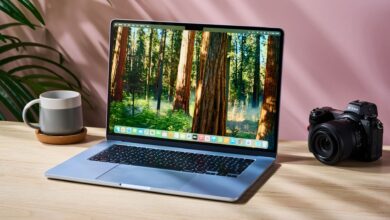
Apple Silicon M1 MacBook Air: A Five-Year Retrospective
Five years ago, the landscape of personal computing was irrevocably altered. The catalyst? The introduction of the first Apple Silicon MacBook Air M1. This wasn’t just another iterative update; it was a paradigm shift, a bold declaration that Apple was ready to redefine the very core of its hardware ecosystem. The impact of the M1 MacBook Air resonated far beyond the Apple faithful, influencing the entire industry and setting a new standard for performance, efficiency, and overall user experience. Let’s delve into the journey of this revolutionary device and explore the lasting legacy it has carved in the world of technology.

The Genesis of Apple Silicon: A Bold Move
The announcement of Apple Silicon at WWDC 2020 was a watershed moment. The shift away from Intel processors, a partnership that had defined the Mac for over a decade, was a monumental undertaking. Apple’s rationale was simple: to exert greater control over its hardware and software integration, leading to optimized performance and efficiency. This decision echoed Apple’s approach with its mobile devices, where custom-designed silicon had consistently delivered impressive results.
The transition wasn’t without precedent. Apple had previously migrated from PowerPC to Intel in 2006. However, the move to Apple Silicon felt different. This time, Apple was not just switching processors; it was fundamentally reimagining the architecture of the Mac. The promise was compelling: a unified ecosystem where hardware and software worked in perfect harmony, unlocking new levels of performance and power efficiency. This move allowed Apple to optimize for specific tasks and create a more seamless user experience. Furthermore, developing their own silicon allowed Apple to innovate at a faster pace, independent of Intel’s roadmap. The introduction of Apple Silicon was more than just a hardware change; it was a strategic move that would reshape the future of Apple’s entire product line. Those looking for a discount on the latest models should keep an eye out for deals where you can get 25% off Apple’s M4 MacBook Air.
The M1 MacBook Air: A Game Changer Unveiled
The Apple Silicon M1 MacBook Air was the first fruit of this ambitious endeavor. It wasn’t just a faster MacBook Air; it was a fundamentally different machine. The M1 chip, a System on a Chip (SoC), integrated the CPU, GPU, Neural Engine, I/O controllers, and more onto a single chip. This integration resulted in significant performance gains and a dramatic improvement in power efficiency. The M1 MacBook Air could handle demanding tasks like video editing and graphic design with ease, all while sipping power and running silently. This was a stark contrast to previous MacBook Air models, which often struggled with heavier workloads and were prone to overheating. The M1 MacBook Air offered a seamless blend of performance and portability, making it an ideal machine for students, professionals, and anyone who needed a powerful and versatile laptop.

Performance Revolution: Unleashing Unprecedented Power
The performance leap delivered by the M1 chip was nothing short of revolutionary. The M1 MacBook Air outperformed many of its Intel-based predecessors, even those with higher specifications. This was due to the M1’s efficient architecture and tight integration with macOS. Applications launched instantly, multitasking was smooth and responsive, and even demanding tasks like video editing and gaming were handled with aplomb. The M1 chip’s integrated GPU provided a significant boost in graphics performance, making the M1 MacBook Air a capable machine for creative professionals. Furthermore, the M1’s Neural Engine accelerated machine learning tasks, enabling features like real-time video effects and enhanced image processing. The combination of CPU, GPU, and Neural Engine power made the M1 MacBook Air a true all-rounder, capable of handling a wide range of tasks with ease. For users looking for even more customization options in their laptops, the Framework Laptop 16 offers a compelling alternative.
The impact on battery life was equally impressive. The M1 MacBook Air could easily last for 15-18 hours on a single charge, making it an ideal companion for travel and on-the-go productivity. This extended battery life was a direct result of the M1’s power-efficient design. The chip consumed significantly less power than its Intel counterparts, allowing the M1 MacBook Air to run cooler and longer. This combination of performance and battery life was a game-changer, setting a new standard for ultraportable laptops. It also paved the way for future Apple Silicon chips, which would continue to push the boundaries of performance and efficiency.
The Rosetta 2 Effect: Seamless Transition
Apple understood that transitioning to a new architecture could be challenging for developers and users alike. To address this, they introduced Rosetta 2, a translation layer that allowed applications designed for Intel-based Macs to run seamlessly on Apple Silicon. Rosetta 2 worked remarkably well, allowing users to run most of their existing software without any noticeable performance degradation. This seamless transition was crucial to the success of the M1 MacBook Air. Users could continue to use their favorite applications without having to wait for developers to release native Apple Silicon versions. Rosetta 2 provided a bridge between the old and the new, ensuring a smooth and painless transition for everyone. While native apps always perform better, Rosetta 2 was an excellent stopgap that allowed users to embrace the new Apple Silicon platform without sacrificing compatibility. Furthermore, Apple actively worked with developers to encourage them to create native Apple Silicon versions of their applications, ensuring a long-term future for the platform.
Beyond Performance: The Holistic Experience
The Apple Silicon M1 MacBook Air wasn’t just about raw performance; it was about the holistic user experience. The combination of the M1 chip, macOS, and Apple’s ecosystem created a seamless and intuitive computing experience. The operating system felt more responsive than ever, applications launched instantly, and the entire system felt incredibly fluid. The M1 MacBook Air also benefited from Apple’s tight integration between hardware and software. Features like Universal Control and AirDrop worked flawlessly, allowing users to seamlessly switch between their Mac, iPad, and iPhone. This tight integration created a cohesive and unified ecosystem that enhanced productivity and creativity. The M1 MacBook Air was more than just a laptop; it was a gateway to Apple’s world of interconnected devices and services.
The Silent Revolution: A Fanless Design
One of the most remarkable aspects of the Apple Silicon M1 MacBook Air was its fanless design. Thanks to the M1’s power efficiency, the MacBook Air could run silently, even under heavy workloads. This was a significant departure from previous MacBook Air models, which often relied on fans to dissipate heat. The fanless design made the M1 MacBook Air incredibly quiet and unobtrusive, allowing users to focus on their work without any distracting fan noise. This also contributed to the MacBook Air’s sleek and minimalist design. Without the need for vents, the MacBook Air could be even thinner and lighter, making it an even more portable and desirable machine. The silent operation of the M1 MacBook Air was a testament to the efficiency of the Apple Silicon architecture and a significant selling point for many users. The design philosophy is so appealing that many consider the Macbook Air M2 their favorite laptop.
The Industry’s Response: A New Era of Innovation
The Apple Silicon M1 MacBook Air sent shockwaves through the industry. Competitors scrambled to respond, recognizing that Apple had raised the bar for performance and efficiency. Intel, in particular, faced increasing pressure to improve its mobile processors. The M1 MacBook Air forced the entire industry to rethink its approach to laptop design. Manufacturers began to prioritize power efficiency and integrated solutions, taking inspiration from Apple’s approach. The M1 MacBook Air also accelerated the adoption of ARM-based processors in laptops. Other companies, like Microsoft, began to invest more heavily in ARM-based solutions, recognizing the potential of this architecture. The M1 MacBook Air was a catalyst for innovation, pushing the entire industry forward and paving the way for a new era of mobile computing. It’s also worth noting that the advancements in audio technology have led to impressive products like the Sony WH-1000XM5 headphones, which offer exceptional sound quality and noise cancellation.
The Enduring Legacy: Five Years Later
Five years after its debut, the Apple Silicon M1 MacBook Air remains a relevant and capable machine. It continues to offer excellent performance, long battery life, and a seamless user experience. While newer Apple Silicon chips have surpassed the M1 in terms of raw power, the M1 MacBook Air still holds its own, proving the longevity and efficiency of the Apple Silicon architecture. The M1 MacBook Air has also set a new standard for value in the ultraportable laptop market. Its combination of performance, battery life, and price makes it an attractive option for students, professionals, and anyone looking for a reliable and versatile laptop. The M1 MacBook Air’s legacy extends beyond its own capabilities. It has paved the way for future Apple Silicon chips and has influenced the entire industry. It is a testament to Apple’s commitment to innovation and its ability to redefine the boundaries of personal computing. The MacBook Air M1 truly changed everything. As AI evolves, it is important to consider the implications of new technologies, such as SoundCloud’s royalty offers, and ensure fair practices.
Looking Ahead: The Future of Apple Silicon
The Apple Silicon M1 MacBook Air was just the beginning. Apple has continued to innovate with its Apple Silicon chips, releasing the M2, M3, and now M4 series, each offering significant performance improvements over its predecessor. These newer chips have expanded the capabilities of the Mac, enabling even more demanding tasks like 8K video editing and complex 3D rendering. Apple’s commitment to Apple Silicon has also extended to its other product lines, including the iPad and iMac. This unified ecosystem allows developers to create applications that run seamlessly across all Apple devices, enhancing the user experience and increasing productivity. The future of Apple Silicon is bright, with Apple continuing to push the boundaries of performance and efficiency. As Apple continues to refine its Apple Silicon architecture, we can expect to see even more innovative and powerful Macs in the years to come. The integration of AI tools like Gemini Pro further enhances the capabilities of these devices.