Mastering Your Chevrolet Blazer EV Test Drive Checklist
Embarking on the journey to purchase a new electric vehicle, especially one as anticipated as the 2025 Chevrolet Blazer EV, is an exciting prospect. However, the true measure of a vehicle’s suitability for your lifestyle often comes down to the test drive. It’s a critical opportunity to move beyond specifications and experience the car firsthand. This comprehensive Chevrolet Blazer EV test drive checklist is designed to empower you, ensuring you scrutinize every vital aspect of GM’s midsize electric SUV before making a commitment. From the nuances of its handling to the intricacies of its advanced technology, we’ll guide you through the essential considerations to help you determine if the Blazer EV truly aligns with your expectations and needs. Don’t let the pressure of the dealership environment overshadow your critical evaluation; come prepared and drive with purpose.

The Crucial First Impression: Steering and Handling Dynamics
The way a vehicle feels in your hands, particularly through its steering, is fundamental to the driving experience. For the Chevrolet Blazer EV, this is a point worth particular attention. While many drivers find the steering adequate for typical driving scenarios, a deeper dive during your Chevrolet Blazer EV test drive checklist is highly recommended. The slow steering ratio, which often translates to approximately 3.4 turns lock-to-lock, contributes to a sense of deliberate and accurate handling on open roads, such as freeway ramps or gently sweeping highway curves. This characteristic can be reassuring at higher speeds, offering a stable and predictable feel as you navigate longer stretches. However, this same attribute can present a different dynamic in more confined settings, making it an important element to assess thoroughly.
Low-Speed Maneuvers and Urban Agility
Where the Blazer EV’s steering truly warrants scrutiny is during low-speed maneuvers and urban driving. Executing a three-point turn in a tight parking lot, for instance, might require more wheel input than you’d typically expect, leading to a sensation of “twirling the wheel” back and forth. Similarly, making a sharp 90-degree turn from a stop sign in a busy city environment can demand more than a full rotation of the steering wheel. This isn’t necessarily a flaw, but rather a characteristic that some drivers might find less intuitive or more cumbersome, especially if they are accustomed to vehicles with quicker steering ratios. During your test drive, actively seek out opportunities to perform these types of maneuvers: parallel parking, U-turns, navigating crowded parking garages, and making sharp turns at intersections. Pay close attention to the effort required and whether the steering response feels natural and proportionate to your input. This will be a significant factor in your daily driving comfort, particularly if your routine involves frequent urban navigation. Ensure this aspect of the Chevrolet Blazer EV test drive checklist meets your personal preferences before proceeding further.
Freeway Stability and Control
Conversely, on the open highway, the Blazer EV’s steering characteristics can contribute positively to stability. The slightly slower ratio often translates to less twitchiness and a more composed feel at higher speeds, reducing the need for constant minor corrections. This can make for a more relaxed and confident driving experience on long journeys. During your test drive, take the vehicle onto a freeway or a road with a higher speed limit. Observe how it tracks in a straight line, how it responds to gentle lane changes, and how stable it feels when encountering crosswinds or uneven pavement. While the low-speed agility might be a point of contention for some, its high-speed manners are generally well-regarded for their predictability and comfort. The balance between these two extremes is what you, as a potential owner, must weigh against your primary driving habits.
Infotainment System: Google Built-in Experience
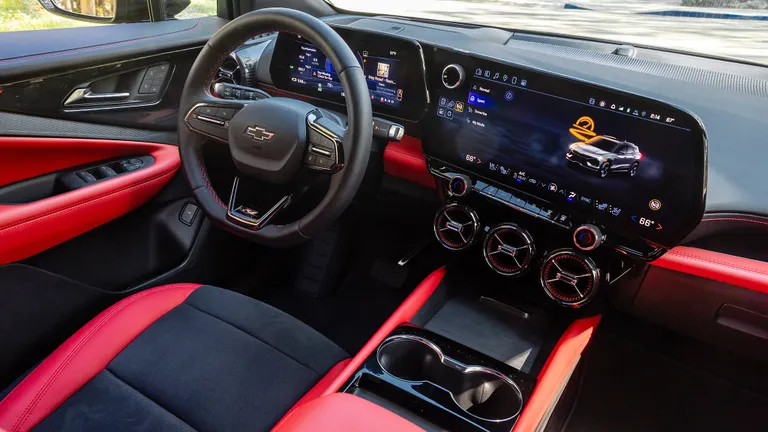
Modern vehicles are increasingly defined by their digital ecosystems, and the 2025 Chevrolet Blazer EV is no exception. It features a substantial 17.7-inch infotainment touchscreen, which serves as the command center for navigation, entertainment, and vehicle settings. A notable point on your Chevrolet Blazer EV test drive checklist is the absence of Apple CarPlay and Android Auto compatibility. Instead, Chevrolet has opted for an expansive suite of Google built-in applications, aiming to provide similar, if not enhanced, functionality directly within the vehicle’s native system. This integrated approach has its own set of advantages and considerations that warrant thorough exploration during your test drive.
Navigating with Google Maps and Voice Commands
The core of the navigation experience relies on the native Google Maps app. During your test drive, actively punch in various destinations, including both familiar and unfamiliar locations. Assess the system’s responsiveness, the clarity of the map display, and the accuracy of turn-by-turn directions. Pay particular attention to the voice command functionality. Can you easily initiate navigation, search for points of interest, or adjust settings using natural language? Evaluate how quickly the system processes your commands and whether it accurately understands your requests. A robust and intuitive voice command system can significantly reduce driver distraction, making the journey safer and more enjoyable. For optimal in-car connectivity, understanding advanced network technologies like Wi-Fi 7 across full-fibre plans can be insightful for future-proofing your digital ecosystem, though the Blazer EV’s system will rely on its own integrated cellular connection.
App Ecosystem and Entertainment Options
Beyond navigation, the Google built-in system offers access to a downloadable Spotify player and the broader Google Play Store. During your test drive, take the time to explore these options. Download an app or two, play some music through Spotify, and browse the available selections in the Play Store. This will give you a clear picture of the breadth of entertainment and utility applications available. Consider whether this integrated experience provides all the functionality you typically rely on from your smartphone mirroring apps. While evaluating the Blazer EV’s sound system, audiophiles might appreciate detailed reviews of high-fidelity audio equipment, such as a complete guide on the DALI KUPID review, to benchmark sound performance and ensure the Blazer EV’s audio output meets their standards.
The Absence of Apple CarPlay/Android Auto: A Deal-Breaker?
For many, the lack of Apple CarPlay or Android Auto is a significant departure from the norm. During your Chevrolet Blazer EV test drive checklist, you must honestly assess if the Google built-in experience effectively replaces these familiar interfaces for you. Does it seamlessly integrate with your existing digital life? Are there any specific apps or functionalities you use daily on CarPlay/Android Auto that are not adequately replicated by the Google system? The user interface of the Blazer EV’s infotainment system plays a crucial role in daily usability, much like how a One UI 8.5 beta transformed a Samsung phone’s experience, highlighting the impact of software design on user satisfaction. Your comfort with this proprietary system is paramount, as it will be your primary interface with the vehicle’s digital world.
Powertrain Performance and Regenerative Braking
The essence of an electric vehicle lies in its unique powertrain, offering a distinct driving feel compared to traditional internal combustion engines. The Chevrolet Blazer EV is built on GM’s Ultium platform, promising brisk acceleration and an efficient driving experience. Your test drive should focus heavily on understanding these characteristics, particularly how they align with your driving style and expectations. This section of the Chevrolet Blazer EV test drive checklist delves into the immediate responsiveness and energy management capabilities of the vehicle.
Acceleration and Instant Torque Delivery
One of the most appealing aspects of EVs is their instant torque. The Blazer EV should provide immediate and smooth acceleration from a standstill, making city driving nimble and merging onto highways effortless. During your test drive, experiment with different levels of acceleration. Feel the initial surge of power when you press the pedal from a stop. Evaluate its responsiveness when you need to quickly accelerate to pass another vehicle on the highway. Does the power delivery feel linear and predictable, or does it surprise you? Pay attention to how quietly and smoothly this power is delivered, as the absence of engine noise amplifies the sensation of acceleration. Ensure that the performance matches your expectations for an electric SUV.
One-Pedal Driving and Regenerative Braking Effectiveness
Regenerative braking is a hallmark of electric vehicles, and the Blazer EV offers one-pedal driving capabilities. This feature allows the vehicle to decelerate significantly, and even come to a complete stop, simply by lifting your foot off the accelerator pedal, simultaneously feeding energy back into the battery. During your test drive, experiment with one-pedal driving in various scenarios: stop-and-go traffic, approaching red lights, and descending gentle slopes. How intuitive does it feel? Can you modulate the deceleration smoothly, or does it feel too abrupt or too weak? Some drivers find one-pedal driving incredibly efficient and comfortable, while others prefer a more traditional two-pedal approach. Assess if this feature enhances or detracts from your driving enjoyment. Also, test the conventional brake pedal to ensure it offers a firm, consistent feel and confidence-inspiring stopping power when needed.
Different Drive Modes (e.g., Sport, Tour, Off-Road if applicable)
Many modern vehicles, including EVs, offer selectable drive modes that alter the vehicle’s dynamics. The Blazer EV may feature modes like “Sport,” “Tour,” or potentially “Off-Road” or “Snow” depending on the trim. During your test drive, cycle through these available modes (if equipped) and observe how they change the vehicle’s character. Does “Sport” mode sharpen throttle response and steering feel? Does “Tour” mode prioritize comfort and efficiency? Understanding how these modes impact the driving experience is crucial for tailoring the vehicle to different situations and preferences. For families, considering how to keep passengers entertained on longer journeys, perhaps with devices like the Amazon Fire HD 8 Kids Pro tablet, can add significant value to the overall ownership experience, complementing the driving modes with passenger comfort.
Interior Comfort, Ergonomics, and Practicality
Beyond the driving dynamics, the interior of the Chevrolet Blazer EV is where you’ll spend most of your time. Therefore, a thorough evaluation of its comfort, ergonomic design, and practicality is indispensable during your Chevrolet Blazer EV test drive checklist. This goes beyond just aesthetics; it’s about how the vehicle functions as a living space on wheels, accommodating your body, your belongings, and your daily routine.
Seat Comfort and Adjustability
The seats are your primary point of contact with the vehicle, so their comfort is paramount. During your test drive, adjust the driver’s seat to your preferred position. Is there ample lumbar support? Do the side bolsters hold you comfortably without being restrictive? How intuitive are the adjustment controls? Take note of the cushioning – is it too firm or too soft for your liking? Also, consider the passenger seats, especially if you frequently travel with others. Ask your passenger to evaluate their comfort, legroom, and headroom. A short test drive might not reveal long-term comfort issues, but it can highlight immediate concerns about support and positioning. Ensure that the seating position offers good visibility of the road and instruments.
Cabin Noise and Ride Quality
Electric vehicles are inherently quieter than gasoline cars, but cabin noise can still be an issue if wind, tire, or road noise isn’t adequately suppressed. During your test drive, pay close attention to the overall quietness of the cabin at various speeds. Does wind whistle around the mirrors or pillars? Is there excessive road noise, especially on different pavement types? The ride quality is equally important: how well does the suspension absorb bumps, potholes, and road imperfections? Does the vehicle feel composed and stable, or does it exhibit excessive body roll or harshness over uneven surfaces? A smooth and quiet ride contributes significantly to passenger comfort and reduces driver fatigue on longer trips.
Storage Solutions and Cargo Space
Practicality in an SUV often comes down to its ability to carry both people and cargo. Examine the various storage solutions within the cabin. Are there convenient cup holders, cubbies, and a generously sized center console? Are the door pockets functional? Critically, assess the cargo space. Open the rear hatch and consider the ease of loading and unloading. If possible, bring a common item you frequently transport (e.g., a stroller, golf clubs, grocery bags) to see how it fits. Inquire about the volume with the rear seats up and folded down. Does the load floor lie flat when the seats are folded? These details are crucial for everyday usability and should be a key part of your Chevrolet Blazer EV test drive checklist.
Visibility and Blind Spots
Good visibility is a critical safety and comfort feature. From the driver’s seat, assess your field of vision in all directions. Are the A-pillars excessively thick, creating blind spots? How clear is your view out of the rear window? Check the side mirrors – are they large enough and positioned effectively? While driving, actively look over your shoulder to check for blind spots. The design of the vehicle can significantly impact how easily you can perceive your surroundings, especially when changing lanes or backing up. Modern vehicles often compensate with technology, but inherent visibility remains a core consideration.
Charging Experience and Range Anxiety
For any electric vehicle, understanding the charging infrastructure and managing range expectations is paramount. The Chevrolet Blazer EV test drive checklist should extend beyond the immediate driving experience to include a discussion and clear understanding of what EV ownership entails regarding power. While you can’t test charge during a typical dealership drive, you can gather crucial information and simulate scenarios.
Understanding Charging Speeds (AC/DC)
Engage with the salesperson about the Blazer EV’s charging capabilities. Inquire about its Level 2 (AC) charging speed, which is typically used for home charging, and its DC fast-charging (DCFC) rates. Understand the difference in charging times for various battery capacities and how quickly it can replenish range at public fast chargers. Ask about the type of charging port it uses (e.g., CCS) and any adapters that might be necessary. A clear picture of charging infrastructure will help manage expectations and plan for both daily commutes and longer road trips. Just as mobile applications like WhatsApp receive regular updates with new features, the Blazer EV’s software will also evolve, bringing enhancements and improvements over time, potentially impacting charging optimizations.
Real-World Range Assessment
While official EPA range estimates are helpful, real-world range can vary significantly based on driving style, temperature, terrain, and use of climate control. Discuss with the salesperson what factors influence the Blazer EV’s range and what typical drivers experience in your local climate. Though you can’t perform a full range test, observe the vehicle’s estimated range display during your test drive. Does it seem consistent with your planned usage? Consider your daily commute and typical travel patterns to determine if the Blazer EV’s range capabilities meet your needs without inducing “range anxiety.”
Charging Port Location and Ease of Access
A seemingly minor detail, the location and ease of access to the charging port can impact daily convenience. During your walk-around, locate the charging port. Is it easily accessible regardless of how you park? Is it conveniently placed for home charging setups or public charging stations? Does it have a power-operated door, or is it a manual flap? These small ergonomic considerations