Ikea’s Qi2 Wireless Charger: Unpacking Its Unexpected Features
Ikea, the Swedish home furnishings giant, is no stranger to integrating technology into everyday living. From smart lighting to integrated audio, their ventures into consumer electronics often blend functionality with minimalist design. Their latest offering, the Ikea Qi2 wireless charger, initially presents an appearance that might be described as unconventional, perhaps even odd. Yet, beneath its distinctive exterior lies a surprisingly robust and fully-featured device, poised to redefine how we perceive affordable, integrated wireless charging solutions. This article delves into the specifics of this intriguing new product, exploring its design, capabilities, and the broader implications for wireless charging technology in our homes.
The advent of Qi2 wireless charging marks a significant leap forward from its predecessor, promising faster, more efficient, and magnetically aligned power delivery. Ikea’s embrace of this standard is not merely a technical upgrade; it represents a commitment to providing users with advanced features that often come at a premium price point. While its aesthetic might not appeal to everyone at first glance, a closer examination reveals a thoughtfully engineered product designed for convenience, versatility, and performance, making the Ikea Qi2 wireless charger a compelling option in a crowded market.
The Evolution of Wireless Charging: Why Qi2 Matters
Wireless charging has been a staple in many households for years, offering the convenience of powering up devices without the tangle of cables. However, the original Qi standard, while revolutionary, had its limitations. Users often struggled with precise device alignment, leading to slower charging speeds or, worse, no charge at all. This frustration, coupled with varying power outputs across different chargers, often made the experience less seamless than desired. The introduction of Qi2 aims to rectify these issues and propel wireless charging into a new era of efficiency and user-friendliness.
From Qi to Qi2: A Leap in Efficiency and Speed
The second generation of the Qi standard, Qi2, builds upon the foundational principles of wireless power transfer while incorporating significant enhancements. The most notable improvement is the integration of Apple’s MagSafe technology, which has been open-sourced and adopted by the Wireless Power Consortium (WPC) as the Magnetic Power Profile (MPP). This magnetic alignment system ensures that devices are perfectly positioned on the charging pad every time, maximizing power transfer efficiency and eliminating the guesswork that plagued older Qi chargers. This magnetic alignment not only guarantees a reliable charge but also unlocks the potential for faster charging speeds, moving from the typical 7.5W or 10W to a more robust 15W for compatible devices. This boost in power means less time tethered to an outlet and more time enjoying your fully charged gadgets.
Beyond speed, Qi2 also brings improved safety features, ensuring devices are charged optimally without overheating or risking damage. The standard also promotes greater interoperability, meaning a Qi2-certified charger should work seamlessly with any Qi2-compatible device, regardless of the manufacturer. This universal compatibility is a game-changer, simplifying the charging experience and reducing the need for multiple, brand-specific chargers. For consumers, this translates to a more streamlined and reliable charging ecosystem, making the upgrade to Qi2 not just a luxury but a practical enhancement for daily life.
MagSafe Compatibility and Enhanced User Experience
The adoption of MagSafe-like magnetic alignment within the Qi2 standard is a boon for user experience. For iPhone users, this means the seamless, satisfying “snap” of MagSafe charging is now available across a wider range of accessories, including the Ikea Qi2 wireless charger. This precise alignment isn’t just about convenience; it optimizes the power coil connection, leading to more consistent and efficient energy transfer. No more waking up to a phone that didn’t charge overnight because it was slightly off-center. The magnetic connection holds the device firmly in place, allowing for stable charging even if the charger is bumped or moved.
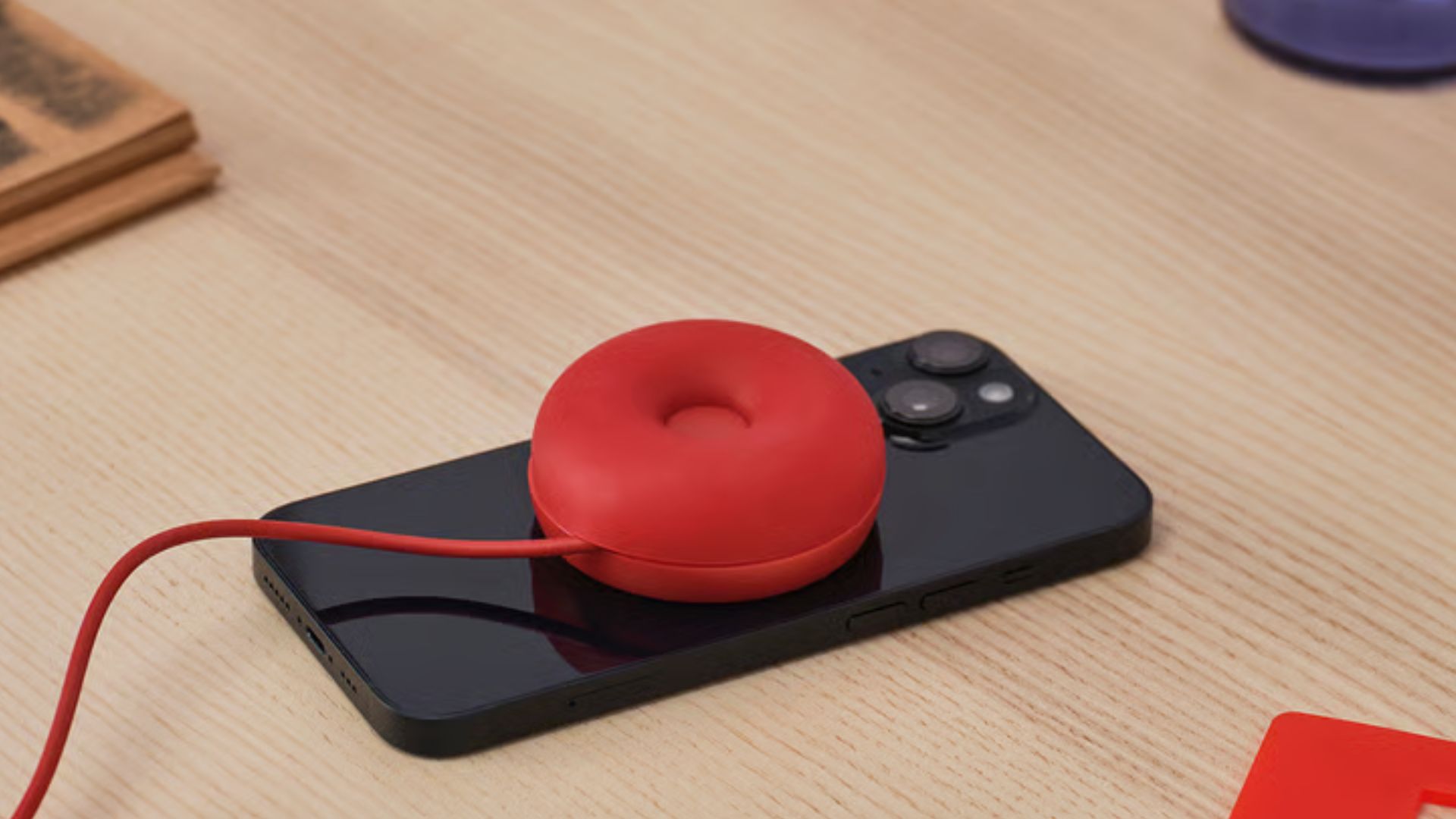
Furthermore, this magnetic capability opens up new possibilities for accessory design. Devices can now be charged in various orientations, making it easier to use your phone while it’s charging, whether for video calls or browsing. The enhanced stability also means that accessories like stands and mounts can incorporate Qi2 charging more effectively, creating a more integrated and functional setup. This leap in user experience is precisely why the Ikea Qi2 wireless charger stands out; it’s not just a charger, but a step towards a more intuitive and integrated charging ecosystem for all compatible devices.
Ikea’s Forhoja Qi2 Charger: A Closer Look
When Ikea first unveils a new tech product, it’s often met with a mix of curiosity and skepticism. Their approach tends to prioritize affordability and integration into their broader home ecosystem, sometimes at the expense of cutting-edge aesthetics or raw performance. However, the Forhoja Ikea Qi2 wireless charger challenges these preconceptions, presenting a device that, while visually distinct, delivers on advanced functionality in spades. Its name, “Forhoja,” which translates to “elevate” or “enhance” in Swedish, perfectly encapsulates its ambition to elevate the wireless charging experience.
Initial Impressions: The “Odd” Design Philosophy
The first thing many people notice about the Forhoja Ikea Qi2 wireless charger is its unconventional design. Unlike the sleek, flat pucks or minimalist stands that dominate the wireless charger market, Ikea’s offering often features a more utilitarian or even sculptural form factor. This “odd” appearance is not accidental; it’s a deliberate choice rooted in Ikea’s design philosophy, which often seeks to create objects that are both functional and blend seamlessly into various home environments, sometimes even serving multiple purposes. Forhoja, for instance, might incorporate elements that suggest it’s part of a modular furniture system or a standalone decorative piece, rather than just a tech accessory.
This design could involve unusual shapes, textures, or even materials that deviate from the standard plastic or metal. While some might find it visually jarring initially, others might appreciate its departure from generic tech aesthetics, seeing it as a piece that adds character to a room. The visual distinctiveness, while polarizing, certainly ensures it stands out. It forces a conversation about form versus function, and whether a charging device needs to conform to established norms or if it can carve out its own unique identity within the home landscape. This design strategy is not new for Ikea, and it often results in products that become surprisingly beloved once their utility and integration are understood.
Under the Hood: Key Specifications and Performance
Despite its potentially polarizing exterior, the Forhoja Ikea Qi2 wireless charger is packed with impressive specifications that underscore its fully-featured nature. At its core, it supports the full 15W Qi2 charging output, meaning compatible smartphones can power up at speeds comparable to wired fast charging. This is a significant upgrade from the 7.5W or 10W limits of many older Qi chargers, making a tangible difference in daily use. The inclusion of the Magnetic Power Profile ensures perfect alignment, eliminating charging inefficiencies and providing a consistent power flow.
Beyond the primary charging pad, the Forhoja often includes additional charging surfaces or ports. Some iterations might feature a secondary Qi pad for earbuds or smartwatches, or even a USB-C port for wired charging of other devices. This multi-device charging capability enhances its utility, turning a single charging station into a comprehensive power hub. Safety features are also robust, with integrated over-current, over-voltage, and temperature protection mechanisms ensuring devices are charged safely and efficiently. The power input typically comes via a modern USB-C port, allowing for flexibility with power adapters. The combination of high power output, magnetic alignment, and multi-device support makes the Forhoja a powerful contender in the wireless charging arena, far exceeding what its initial “odd” appearance might suggest.
The Integrated Features That Surprise
What truly sets the Ikea Qi2 wireless charger apart are the thoughtful, integrated features that go beyond mere charging. Ikea often designs its tech products to be more than just standalone gadgets; they are meant to enhance the living space. Forhoja, for example, might incorporate a subtle LED indicator that changes color to signify charging status without being overly bright or distracting. Some models could even include built-in cable management solutions, allowing users to neatly tuck away the power cable for a cleaner aesthetic.
More surprisingly, some Ikea charging solutions integrate seamlessly with their smart home ecosystem. While the Forhoja might not be a full-fledged smart hub, it could potentially communicate with other Ikea smart devices, perhaps dimming nearby lights when a device is fully charged, or offering scheduled charging options through an app. The robust build quality, often characteristic of Ikea products, ensures durability. Furthermore, the charger might be designed to fit perfectly into specific Ikea furniture pieces, such as a cutout in a bedside table or a slot in a desk organizer, making it feel less like an add-on and more like an intrinsic part of the furniture. These subtle yet impactful integrations transform the charging experience from a simple necessity into a more cohesive and intelligent part of the home environment. This holistic approach to product design is a hallmark of Ikea, and the Forhoja Ikea Qi2 wireless charger exemplifies this philosophy beautifully.
Practical Applications and User Scenarios
The true measure of any tech product lies in its practical application and how it integrates into the daily lives of users. The Ikea Qi2 wireless charger, with its unique design and advanced features, is designed to enhance several user scenarios, making wireless charging more accessible, convenient, and aesthetically pleasing within the home environment. Its versatility allows it to serve various roles, from a discreet bedside companion to a central charging hub in a communal living space.
Seamless Integration into Home Decor
One of the primary benefits of Ikea’s design philosophy is its focus on blending functionality with home aesthetics. The Forhoja Ikea Qi2 wireless charger, despite its “odd” appearance to some, is often designed with specific home decor styles in mind. Its materials, colors, and form factor might complement contemporary, Scandinavian, or even more traditional interiors. This makes it easier to place the charger in visible areas without it looking like an intrusive piece of technology. For instance, if it’s designed with a wooden finish, it might seamlessly integrate into a living room with similar furniture. If it’s a sleek, geometric shape, it could become a modern accent on a desk.
Furthermore, Ikea’s expertise in furniture means that the charger might be designed to fit into existing or new Ikea furniture lines. Imagine a bedside table with a dedicated, perfectly sized recess for the charger, or a desk organizer that incorporates the charging pad as a core component. This level of integration goes beyond mere aesthetics; it simplifies cable management and reduces clutter, contributing to a cleaner, more organized living space. The goal is to make the technology disappear into the background, becoming an intuitive part of the furniture rather than a separate gadget. This thoughtful approach ensures that the Ikea Qi2 wireless charger isn’t just a utility but an enhancement to the overall home environment.
Charging Multiple Devices: Efficiency and Convenience
Modern households are typically brimming with multiple wirelessly chargeable devices: smartphones, smartwatches, wireless earbuds, and more. The Forhoja Ikea Qi2 wireless charger often caters to this multi-device reality by offering more than just a single charging spot. Many versions include multiple Qi2 pads, strategically placed to accommodate a phone and earbuds simultaneously, or even a third spot for a smartwatch. This significantly reduces the number of chargers and outlets needed, centralizing the charging process and decluttering surfaces.
The efficiency of Qi2, with its 15W output and magnetic alignment, means that even when charging multiple devices, each receives optimal power without significant degradation in speed. This is crucial for users who need to quickly top up several gadgets before heading out. The convenience factor is immense: instead of searching for the right cable or an available outlet, users can simply place their devices on the designated spots and trust that they will charge reliably and quickly. This multi-device capability, combined with the magnetic precision, transforms the charging station into a truly practical and indispensable hub for all personal electronics, simplifying the daily routine and enhancing overall productivity.
Comparative Analysis with Other Qi2 Chargers
In a market increasingly saturated with Qi2 chargers, the Ikea Qi2 wireless charger stands out not just for its design, but for its value proposition. While premium brands offer sleek, minimalist Qi2 chargers, they often come with a hefty price tag. Ikea’s offering typically provides comparable charging performance—15W Qi2 with magnetic alignment—at a more accessible price point. This makes advanced wireless charging technology available to a broader audience, aligning with Ikea’s mission of making good design and functionality affordable for the many.
Other chargers might boast additional features like integrated clocks, advanced app controls, or exotic materials, but Ikea focuses on core functionality and integration into the home. Its unique design, while “odd” to some, can be a selling point for those looking for something different from the standard black or white plastic puck. Furthermore, Ikea’s commitment to sustainability, often reflected in its material choices and packaging, can also be a differentiating factor. Ultimately, the Forhoja Ikea Qi2 wireless charger positions itself as a practical, reliable, and value-driven choice for consumers who want the benefits of Qi2 without breaking the bank, and who appreciate a product designed with the home ecosystem in mind.
Addressing the “Odd” Design: Form, Function, and Future Trends
The initial reaction to the Ikea Qi2 wireless charger‘s design often centers on its perceived “oddness.” However, this isn’t necessarily a drawback. In a world where tech gadgets often conform to a bland, uniform aesthetic, Ikea frequently dares to be different. This distinctiveness is a core part of its brand identity and reflects a deeper understanding of how technology can and should integrate into diverse home environments, not just sit on a desk as a standalone object. The design is less about being universally appealing and more about being uniquely Ikea, with a focus on purposeful form and integrated function.
Ikea’s Design Language: More Than Just Aesthetics
Ikea’s design language is characterized by simplicity, practicality, and modularity. Products are often designed to be easily assembled, space-saving, and versatile. The “odd” appearance of the Ikea Qi2 wireless charger, when viewed through this lens, begins to make more sense. It might be designed to be stackable, to fit into a specific drawer organizer, or to serve as a base for another Ikea accessory. The materials chosen might prioritize durability and cost-effectiveness, while still aiming for a tactile and visually interesting finish that complements their furniture lines.
This approach moves beyond superficial aesthetics to consider the entire lifecycle and user interaction with the product within a home setting. For example, a charger designed to be part of a larger shelving unit might have a distinct form factor that allows it to slot in seamlessly, rather than being a generic disc. This functional integration is a hallmark of Ikea’s design philosophy. The “oddness” is a result of prioritizing how the product works within a system, rather than how it looks in isolation. It’s a pragmatic beauty that prioritizes utility and environmental fit over standalone visual appeal, reflecting a forward-thinking perspective on how our devices interact with our living spaces.
The Role of Sustainability in Ikea’s Tech Products
Sustainability is a core pillar of Ikea’s global strategy, and this commitment extends to its tech products, including the Ikea Qi2 wireless charger. The “odd” design might also be influenced by material choices aimed at reducing environmental impact. This could involve using recycled plastics, sustainably sourced wood, or other eco-friendly composites. By choosing materials that are less conventional in consumer electronics, Ikea not only differentiates its products but also reinforces its brand values. These materials might have unique textures or finishes that contribute to the charger’s distinct look.
Furthermore, the design might facilitate easier disassembly for recycling at the end of the product’s life, or be built to last longer, reducing the frequency of replacements. Ikea often designs products that are meant to be repaired or have parts replaced, extending their lifespan. This emphasis on circularity and responsible consumption is a significant aspect of their product development. So, while the design might initially seem unusual, it often embodies a deeper commitment to environmental stewardship, proving that innovative technology can also be sustainable. This blend of advanced features and eco-conscious design positions the Ikea Qi2 wireless charger as a thoughtful choice for environmentally aware consumers.
Potential Impact on the Smart Home Ecosystem
Ikea’s foray into Qi2 wireless charging is more than just about charging individual devices; it’s a strategic move that has significant implications for its broader smart home ecosystem. By integrating advanced charging technology into its product lineup, Ikea is reinforcing its position as a key player in creating accessible and integrated smart living solutions. The Ikea Qi2 wireless charger, despite its focused utility, acts as another piece of the puzzle in building a seamlessly connected home.
Ikea’s Broader Smart Home Ambitions
Ikea has been steadily expanding its smart home offerings, from smart lighting (Tradfri) and smart blinds (Fyrtur) to air purifiers (Starkvind) and smart speakers (Symfonisk, in collaboration with Sonos). The introduction of a fully-featured Ikea Qi2 wireless charger aligns perfectly with this ambition. In a truly smart home, even charging solutions should be intuitive and integrated, rather than standalone, unintelligent accessories. While the Forhoja charger might not be a smart hub itself, its presence contributes to the overall smart home experience by providing reliable, efficient power for the very devices that control the smart home – our smartphones.
The potential for future integration is also significant. Imagine a scenario where the charger communicates with the Ikea Home smart app, allowing users to monitor charging status, optimize charging schedules to leverage off-peak electricity rates, or even trigger other smart home routines upon full charge. For example, a fully charged phone on the Ikea Qi2 wireless charger could signal the smart lights in the bedroom to dim for the night. This kind of seamless interaction is where Ikea excels, and the Qi2 charger is a foundational component for future intelligent charging solutions within their ecosystem. It helps solidify Ikea’s vision of making smart home technology an invisible, yet indispensable, part of everyday life.
Future-Proofing Your Devices with Qi2
Investing in a Qi2-compatible charger like Ikea’s is a smart move for future-proofing your tech setup. As more manufacturers adopt the Qi2 standard, it will become the dominant wireless charging protocol, ensuring broad compatibility for years to come. Devices like the latest iPhones, and increasingly, Android smartphones, are embracing Qi2 for its efficiency and magnetic alignment. This means that a Qi2 charger isn’t just for your current phone; it’s ready for your next smartphone, smartwatch, or pair of earbuds. This forward compatibility is particularly crucial given the rapid advancements in mobile technology, including the increasing demand for higher memory and processing power, as seen with discussions around 16GB RAM phones and their evolving needs.
The enhanced safety features and improved power delivery of Qi2 also mean that your devices will be charged more optimally, potentially extending their battery life and overall longevity. This makes the Ikea Qi2 wireless charger a wise investment, offering not just immediate convenience but also long-term value. As the smart home continues to evolve and devices become even more interconnected, a universal and efficient charging standard like Qi2 will be indispensable. Ikea’s early adoption and accessible pricing of this technology ensure that consumers can easily upgrade their charging infrastructure, keeping pace with technological advancements without significant financial strain, and truly making their homes ready for the future.