Unveiling the vivo V70 Series: A Comprehensive Lineup Analysis
The smartphone market is a constantly evolving landscape, with manufacturers consistently pushing the boundaries of technology and design to capture consumer interest. Among these innovators, vivo has carved out a significant niche, particularly with its V-series, known for its camera capabilities and stylish aesthetics. Recent whispers and certifications have shed light on the impending arrival of the vivo V70 Series Lineup, indicating a strategic expansion from its predecessors. This article delves into the latest rumors surrounding the composition of the V70 family, exploring the potential number of devices, their expected market availability, and the strategic implications of this new approach.
Initial reports confirmed the certification of the standard vivo V70 for the Indian market, closely followed by the V70 Lite. These early sightings hinted at a robust new generation. However, the latest insights suggest that these two devices are merely the tip of the iceberg. The rumored vivo V70 Series Lineup is shaping up to be a four-member family, a deliberate move that could signify a refined market segmentation strategy by the brand. Understanding the nuances of this rumored lineup is crucial for consumers and industry watchers alike, as it provides a glimpse into vivo’s future trajectory in the fiercely competitive mid-range and upper mid-range smartphone segments.
The Rumored Four-Member vivo V70 Series Lineup
According to credible sources and industry tipsters, the vivo V70 Series Lineup will not feature the “Pro” or “Pro+” variants that are common in many smartphone families. Instead, vivo appears to be opting for a more streamlined, yet diverse, set of offerings. This rumored structure includes the V70, V70 Lite, V70 Elite, and V70 FE. Each of these models is expected to cater to specific market demands and consumer preferences, ranging from budget-conscious buyers seeking reliable performance to those looking for enhanced features within the mid-range bracket.
The decision to forgo “Pro” models might suggest a focus on optimizing the core V-series experience, potentially channeling resources into fewer, more polished devices. This could lead to a more coherent product message and a clearer value proposition for each member of the family. Let’s break down the rumored members of the vivo V70 Series Lineup and what their designations might imply for their specifications and target audiences.
V70 and V70 Lite: Initial Certifications and Market Entry
The standard vivo V70 and V70 Lite have already made their presence felt through certification listings, signaling their imminent launch. The V70 is specifically slated for the Indian market, a key region for vivo where it enjoys considerable popularity. Typically, the standard “V” model serves as the flagship of the non-Pro series, offering a balanced blend of features, performance, and camera capabilities designed to appeal to a broad user base. Its focus on India suggests a tailored approach to one of the world’s largest smartphone markets.
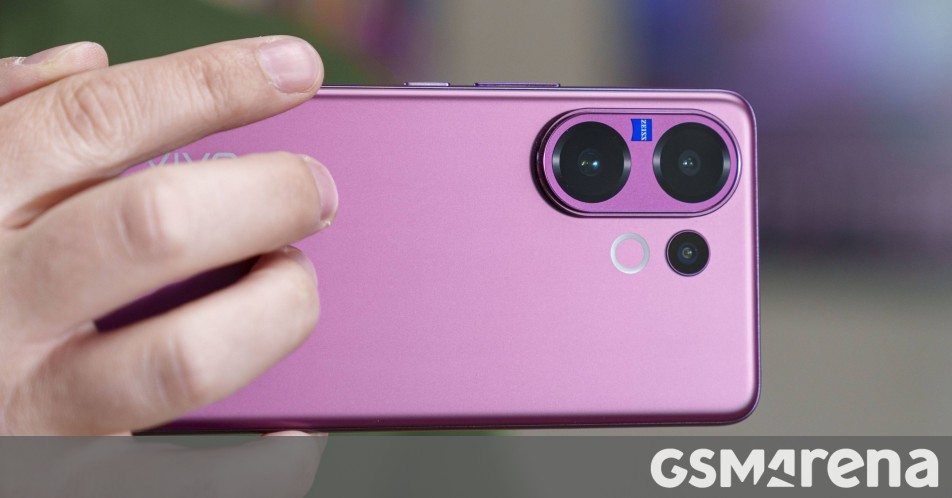
The V70 Lite, as its name suggests, is expected to be a more accessible variant, likely offering a slightly toned-down specification sheet to achieve a more competitive price point. Lite versions often target users who prioritize essential smartphone functions and connectivity without needing the absolute latest in processing power or camera innovations. The fact that both have been certified indicates that these models are past the initial design phase and are nearing mass production and release. Their early appearance in regulatory databases often precedes official announcements by a few weeks or months, building anticipation for the complete vivo V70 Series Lineup.
V70 Elite and V70 FE: Expanding the Portfolio
Adding further depth to the vivo V70 Series Lineup are the rumored V70 Elite and V70 FE. The “Elite” designation typically implies a step up in specifications or premium features compared to the standard model, positioning it as a higher-tier offering without venturing into the “Pro” territory. This could mean a more powerful processor, an enhanced camera system, or a more premium build quality. Such a model would appeal to users who desire a more refined experience and are willing to pay a slight premium for it.
The “FE” (Fan Edition) variant is an interesting addition, a strategy popularized by other brands to offer a device that incorporates popular features at a slightly reduced cost, often with unique colorways or design elements. A V70 FE could be vivo’s way of directly addressing community feedback or offering a highly desirable feature set in a more focused package. This could also be a strategic move to create a buzz and cater to a specific segment of loyal customers. The inclusion of these two variants solidifies the idea that vivo is aiming for comprehensive market coverage with its vivo V70 Series Lineup, ensuring there’s a device for nearly every type of mid-range buyer.
Global vs. Regional Availability Strategy
One of the most critical aspects of any smartphone launch is its market availability. Vivo, like many global brands, employs a differentiated strategy, releasing certain models in specific regions based on local demand, competitive landscape, and regulatory requirements. The vivo V70 Series Lineup is no exception to this approach, with rumors outlining distinct market plans for each device.
India-Specific Releases
As mentioned, the standard vivo V70 is specifically scheduled for India. This highlights the strategic importance of the Indian market for vivo. India is a highly competitive battleground for smartphones, characterized by a large consumer base with diverse needs and price sensitivities. A dedicated launch of the V70 in India suggests that vivo has tailored this particular model, perhaps in terms of pricing, features, or even software optimizations, to resonate deeply with Indian consumers. This localized strategy is often key to achieving significant market share and building brand loyalty in such a dynamic environment. Effective market analysis and a robust content strategy are paramount for success in these regional launches.
Additionally, the V70 FE might also be a model primarily meant for India. If this holds true, the V70 FE could be designed to capture a specific segment within the Indian market, perhaps offering a unique value proposition or focusing on features that are particularly popular among Indian users. This dual-pronged approach with the V70 and V70 FE in India demonstrates a clear intent to dominate various price points and consumer segments within that region, leveraging both a standard offering and a potentially more feature-rich “fan edition.”
Global Market Candidates
For the broader international audience, the V70 Lite and V70 Elite are apparently slated for global releases. This suggests that these two models are designed with a more universal appeal in mind, featuring specifications and designs that can compete effectively across various international markets. The V70 Lite would serve as an entry point for many global consumers into the vivo V70 Series Lineup, offering essential smartphone functionality at an attractive price. Its accessibility would be a key selling point in diverse economies.
The V70 Elite, on the other hand, would represent vivo’s global mid-range contender, offering a more premium experience to users worldwide who are looking for advanced features without the flagship price tag. Its global availability would allow vivo to challenge competitors in multiple territories, showcasing its technological prowess and design philosophy on a wider stage. Such widespread distribution requires careful planning, including thorough SEO audits to ensure product visibility in different search markets, and a keen understanding of global logistics.
Anticipated vivo V70 Series Lineup Overview
Note: Market availability is based on current rumors and certifications and may be subject to change.
Evolution from the V60 Series: A Strategic Shift
To truly appreciate the strategic direction of the vivo V70 Series Lineup, it’s beneficial to look back at its predecessor, the V60 series. The V60 line presented a different segmentation strategy, comprising the V60 itself, the V60 Lite 5G, V60 Lite 4G, and the V60e. This previous generation showcased a mix of 4G and 5G models, reflecting the transitional phase of network adoption at the time. The V60e, for instance, often represented a more budget-friendly option, while the Lite variants addressed different connectivity needs.
V60 Series: A Diverse Predecessor
The V60 series was characterized by its diversity, offering both 4G and 5G options within its “Lite” variants. This approach allowed vivo to cater to markets where 5G infrastructure was still nascent, or where consumers were more price-sensitive and a 4G device offered better value. The V60e also suggested a focus on specific regional or demographic segments, often with slightly different design philosophies or feature sets. This historical context provides a benchmark against which the new V70 strategy can be compared and analyzed.
The variety in the V60 series, while offering choice, might have also presented complexities in marketing and inventory management. With different connectivity standards and varying feature sets across multiple models, the messaging for the V60 family could have been broader. However, it also allowed vivo to test the waters in different market segments and gauge consumer preferences before committing to a more unified approach.
Key Changes in V70 Strategy: Unifying with 5G
A significant and overarching change in the vivo V70 Series Lineup is the universal adoption of 5G connectivity across all models. This is a crucial strategic shift, reflecting the accelerating global rollout of 5G networks and the increasing consumer expectation for future-proof devices. By making all V70 models 5G-enabled, vivo is streamlining its product offering and positioning the entire series as modern and ready for the next generation of mobile communication. This eliminates the need for separate 4G and 5G variants, simplifying the product portfolio and potentially reducing manufacturing complexities.
This move is not just about technology; it’s about market positioning. In an era where 5G is rapidly becoming a standard rather than a premium feature, offering it across the board ensures that no member of the V70 family feels outdated upon release. This unified 5G approach also makes the entire lineup more competitive against rivals who might still offer mixed 4G/5G portfolios in the mid-range segment. Furthermore, ensuring robust technical SEO for product pages will be critical to highlight this universal 5G capability effectively.
Anticipated Features and Market Positioning (Speculative)
While detailed specifications for the vivo V70 Series Lineup are still under wraps, we can make informed speculations about their likely features and market positioning based on vivo’s past trends and industry standards. Each model will likely be carefully crafted to offer a compelling package tailored to its intended audience.
V70: The Standard Bearer
The standard vivo V70, earmarked for India, will likely be a balanced device. We can expect a capable AMOLED display, a decent refresh rate (perhaps 90Hz or 120Hz), and a mid-range 5G-enabled processor from MediaTek or Qualcomm. Camera performance has always been a strong suit for the V-series, so a versatile multi-camera setup with features like optical image stabilization (OIS) on the main sensor is highly probable. Battery life and fast charging are also key consumer concerns, so a substantial battery with vivo’s proprietary fast-charging technology will almost certainly be included. Its positioning will be as a reliable, all-rounder smartphone for the discerning mid-range user.
V70 Lite: Accessible 5G
The V70 Lite, aimed at global markets, will focus on delivering the essential 5G experience at a more attractive price point. This could mean a slightly less powerful processor than the V70, a standard LCD display instead of AMOLED, or a lower refresh rate. The camera system might be simplified, focusing on core functionality rather than advanced features. However, vivo will likely ensure that the user experience remains smooth for everyday tasks, and that the 5G connectivity is robust. This model is designed to bring 5G to a wider audience, making advanced connectivity more affordable globally.
V70 Elite: Premium Mid-Range Experience
The V70 Elite, also targeting global release, is where vivo might introduce more premium features. This could include a more powerful, possibly flagship-tier mid-range chipset, a higher-quality AMOLED display with a faster refresh rate, and potentially a more sophisticated camera array, perhaps incorporating improved telephoto or ultrawide sensors. Design and build materials might also see an upgrade, with glass backs or more refined finishes. The V70 Elite would compete in the upper mid-range segment, challenging devices that bridge the gap between mid-range and true flagships. Its aim is to provide a near-premium experience without the flagship price tag, offering features that enhance user satisfaction and device longevity.
V70 FE: Fan Edition or Regional Special
The V70 FE, if primarily for India, could be a very interesting proposition. “Fan Edition” often implies a focus on features highly valued by a specific user base, sometimes even bringing back popular elements from previous generations or offering unique color options. This could translate to a larger battery, a specific camera sensor known for its performance, or even a particular design aesthetic. It might offer a slightly different processor choice or a different balance of features compared to the standard V70, aiming for a specific value proposition that resonates with local preferences. The FE model is an opportunity for vivo to connect directly with its loyal customer base in India, offering a device that feels specially curated for them.
The Strategic Implications of a Four-Member Lineup
The decision to launch a four-member vivo V70 Series Lineup, particularly one without “Pro” variants, carries significant strategic implications for vivo’s market approach and brand perception. This move suggests a deliberate refinement of its product strategy in a highly competitive segment.
Market Segmentation and Targeting
A four-model lineup allows for precise market segmentation. With the V70, V70 Lite, V70 Elite, and V70 FE, vivo can effectively target distinct consumer groups based on their budget, desired feature set, and regional preferences. This ensures that the brand has a compelling offering for a broader spectrum of mid-range buyers. For instance, the Lite caters to entry-level 5G users, the V70 to the core mid-range, the Elite to those seeking premium features, and the FE to a specific, perhaps value-conscious, enthusiast group. This granular targeting can lead to higher conversion rates and greater overall market penetration. Effective link building strategies and targeted advertising campaigns will be crucial to reach these segmented audiences.
By offering distinct options, vivo minimizes the risk of cannibalization between its own models, where one device inadvertently detracts sales from another within the same series. Each model has a clear purpose and a defined audience, allowing consumers to easily identify the device that best fits their needs without feeling overwhelmed by an excessive number of similar options. This clarity in product hierarchy can significantly improve the customer journey from discovery to purchase.
Manufacturing and Supply Chain Considerations
A streamlined four-member lineup, especially without the complexities of “Pro” variants that often demand the absolute latest and most expensive components, can lead to more efficient manufacturing and supply chain management. Fewer distinct component sets and production lines can reduce costs, simplify logistics, and potentially allow for faster production cycles. This agility is vital in the fast-paced smartphone industry, enabling vivo to respond quickly to market demands and maintain competitive pricing. The universal 5G adoption further simplifies component sourcing, as all models will require similar 5G modems and associated hardware.
This approach also allows for better inventory management, reducing the likelihood of overstocking less popular models or facing shortages of highly demanded ones. By focusing on a well-defined set of devices, vivo can optimize its resource allocation, from research and development to marketing and distribution, ensuring that each member of the vivo V70 Series Lineup receives adequate support and attention.
Consumer Choice and Brand Perception
For consumers, a well-defined lineup with clear differentiation can enhance the buying experience. Instead of being confused by numerous models with subtle differences, users can more easily choose a device that aligns with their budget and feature requirements. This clarity can improve brand perception, positioning vivo as a brand that understands its customers’ needs and offers thoughtful, well-segmented products. The absence of “Pro” models might also signify a focus on delivering excellent value within the mid-range, rather than attempting to compete directly with flagship devices from other brands.
This strategy could also allow vivo to build a stronger identity for its V-series as a whole – perhaps as the go-to series for stylish, camera-centric, and now universally 5G-enabled mid-range smartphones. Consistency in messaging and product offering can foster greater brand loyalty and recognition over time. The careful structuring of information on product pages, potentially utilizing schema markup, can further aid consumer understanding and search engine visibility.
The Importance of 5G Integration Across the Board
The decision to equip every device in the vivo V70 Series Lineup with 5G connectivity is perhaps the most forward-looking aspect of this new strategy. It underscores vivo’s commitment to future-proofing its mid-range offerings and capitalizing on the widespread adoption of next-generation mobile networks.
Future-Proofing for the Modern User
In today’s rapidly advancing technological landscape, a smartphone purchase is an investment. By ensuring all V70 models are 5G-enabled, vivo is providing consumers with devices that will remain relevant and high-performing for years to come. As 5G networks continue to expand and become more robust, users of the V70 series will be able to fully utilize faster download and upload speeds, lower latency, and more reliable connections for streaming, gaming, and productivity. This future-proofing aspect is a significant selling point, offering peace of mind to buyers who want their device to keep pace with technological evolution.
Moreover, the integration of 5G across the entire lineup reflects a confidence in the readiness of 5G infrastructure in key markets. It signals that vivo believes the time for mixed 4G/5G lineups is largely over, and that 5G connectivity is now a fundamental expectation for new smartphone purchases, even in the mid-range segment. This proactive stance ensures that the vivo V70 Series Lineup is not just current, but also prepared for future advancements in mobile technology.
Competitive Advantage in a Crowded Market
The mid-range smartphone market is notoriously crowded, with numerous brands vying for consumer attention. Offering universal 5G across the vivo V70 Series Lineup provides a clear competitive advantage. While some competitors might still offer 4G-only options in this segment to hit lower price points, vivo’s strategy positions its entire V70 family as modern and capable. This can sway purchasing decisions, especially for consumers who are looking to upgrade from older 4G devices and want to experience the benefits of 5G without breaking the bank.
This unified 5G approach simplifies marketing messages, allowing vivo to highlight advanced connectivity as a core feature of the entire series. It avoids the need to differentiate based on network capabilities within the same family, enabling a stronger, more consistent brand message. In a market where specifications often dictate consumer perception, making 5G a standard feature across the board elevates the perceived value and technological sophistication of the entire V70 series, helping it stand out against a sea of competitors. This also aligns with efforts to improve overall website speed and performance for product information, ensuring that users can quickly grasp the value proposition of 5G in these devices.
Conclusion
The rumored vivo V70 Series Lineup, consisting of the V70, V70 Lite, V70 Elite, and V70 FE, marks a significant and strategic evolution for vivo’s popular V-series. By opting for a four-member family without “Pro” variants and universally integrating 5G connectivity, vivo appears to be pursuing a highly refined market segmentation strategy. This approach aims to cater to diverse consumer needs across global and regional markets with clarity, efficiency